
 翻译
翻译
Malaysia’s battery storage story has quietly shifted over the past year. It is no longer just about deploying capacity domestically — LSS6, MyBeST, the Sabah programmes. It is increasingly about becoming a manufacturing base for the region and beyond.
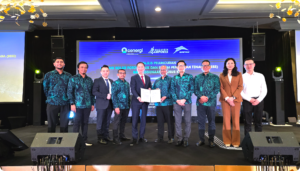
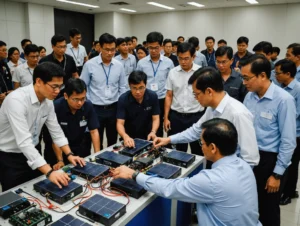
HyperStrong and RCT Power’s smart manufacturing joint venture, Tamco’s assembly partnership with Hoymiles in Shah Alam, and a growing list of similar announcements point to the same trend: Chinese and international BESS vendors are setting up production capacity inside Malaysia, not just selling into it.
That shift raises a question most of these announcements do not address: does manufacturing in Malaysia actually help these products qualify for markets that are tightening rules on Chinese-linked supply chains — most notably the United States?
Why this matters now
Under the US Foreign Entity of Concern (FEOC) rules that took effect this year, battery storage projects must meet a Material Assistance Cost Ratio threshold — currently 55%, rising to 75% by 2030 — of non-FEOC sourced content to remain eligible for federal tax credits. Battery cells alone are typically assigned around half of a system’s direct cost in the safe harbor tables, which means cell sourcing is usually the single biggest factor in whether a project qualifies.
The rules do not simply ask where a battery was assembled. They ask who owns, controls, or financially benefits from the entity that made it. A joint venture or licensed manufacturing arrangement based in Malaysia can, in principle, satisfy FEOC requirements — but only if the ownership and control structure is set up to do so. A Malaysia-based facility that remains majority-owned or effectively controlled by a Chinese parent company does not automatically clear the bar simply by being located outside China.
What this means for Malaysian manufacturing partners
For Malaysian companies entering joint ventures or assembly partnerships with Chinese BESS vendors, this is a structural detail worth understanding before the contracts are signed, not after a customer’s US project fails a compliance review. The corporate structure of the partnership — equity split, board control, licensing terms — will determine whether “manufactured in Malaysia” actually functions as a selling point into FEOC-constrained markets, or whether it is manufacturing capacity without that particular advantage.
A related dynamic playing out elsewhere
Energy & Pulse’s analysis of the FEOC rules breaks down why so few projects are actually able to claim the credit despite qualifying on paper — the compliance threshold is stricter in practice than the headline percentage suggests. For Malaysian manufacturers positioning themselves as a FEOC-compliant alternative to direct Chinese exports, the same level of scrutiny is likely to apply to their own ownership structures.
As Malaysia’s role in the global BESS supply chain grows, this is a distinction MESA members and partners should be tracking closely — not just how much capacity is being built here, but under what ownership terms.