翻译


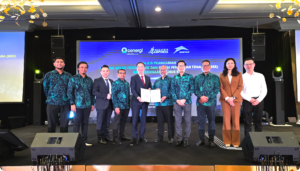
A joint venture company, Bahau Energy Ventures Sdn Bhd, has been formed to develop a 500 MWac solar photovoltaic project paired with a 250 MW / 1,000 MWh battery energy storage system in Bahau, Negeri Sembilan, under the Corporate Renewable Energy Supply Scheme (CRESS).
The shareholders’ agreement was signed on 3 November 2026 between TNB Renewables Sdn Bhd (TRe), Luminous Aspect Sdn Bhd — a wholly owned subsidiary of IOI Corporation Berhad — and CSP 500MW Sdn Bhd, a special purpose vehicle for a consortium of 12 small and medium enterprises. Shareholdings are TRe 70%, Luminous Aspect 25% and CSP 500MW 5%. Maximum equity capitalisation is RM606.2 million, comprising RM424.4 million from TRe, RM151.5 million from Luminous Aspect and RM30.3 million from CSP 500MW, with the project to be funded on a gearing of up to 80% debt and 20% equity. IOI Corporation is the lessor of the roughly 1,300-acre site. These project-level figures come from TNB’s Bursa Malaysia filing as reported by The Star on 4 November 2026; MESA has not been able to retrieve the filing itself.
The offtake sits with TNB, which holds a long-term renewable energy agreement with DayOne Data Centres under which DayOne is expected to procure up to 500 MWac over 21 years.
Two points of context for members.
First, the storage component is unusually large for a CRESS project at 1,000 MWh — four hours at the 250 MW rating. CRESS has had a documented adoption problem despite policy support, and a 1 GWh-class battery entering the scheme is a different order of commitment from the deals that preceded it.
Second, and worth noting precisely: the CRESS Acceleration Package (CAP) does not mention storage. The Energy Commission’s statement of 15 October 2026, issued after its 13 October briefing in Putrajaya, sets out a fixed System Access Charge of 14 sen/kWh for ten years from the Commercial Operation Date for eligible renewable energy developers, a separate CRESS charge of 4 sen/kWh on green consumers based on the prevailing Regulatory Period 4 tariff, eligibility limited to projects achieving COD by 31 December 2028, and a minimum contract period of ten years. It contains no reference to battery storage, no storage requirement and no storage incentive. The Commission said supplementary amendments to the CRESS Guidelines incorporating the CAP were expected to be published by November 2026.
So a project of this size is being structured under a scheme whose own acceleration terms are silent on the asset doing the firming. Members negotiating CRESS arrangements with a storage component should read the forthcoming Guidelines amendments on that specific point, and should note that the 31 December 2028 COD deadline sits roughly two years out for a project of this scale.
No commercial operation date for the Bahau project has been disclosed, and no total project capital cost has been published. TNB’s role is majority equity holder, asset manager, and offtaker; it is not acting as grid operator in this structure. See also MESA’s note on TNB’s one-year data centre connection pledge.
Sources: Suruhanjaya Tenaga, “ST Held Briefing on CRESS Acceleration Package (CAP)”, 15 October 2026. TNB Bursa Malaysia filing as reported by The Star, 4 November 2026. Figures verified 9 November 2026.