
 翻译
翻译
Malaysia’s growing data centre industry is rapidly becoming one of the most important drivers of renewable energy and energy storage investment.
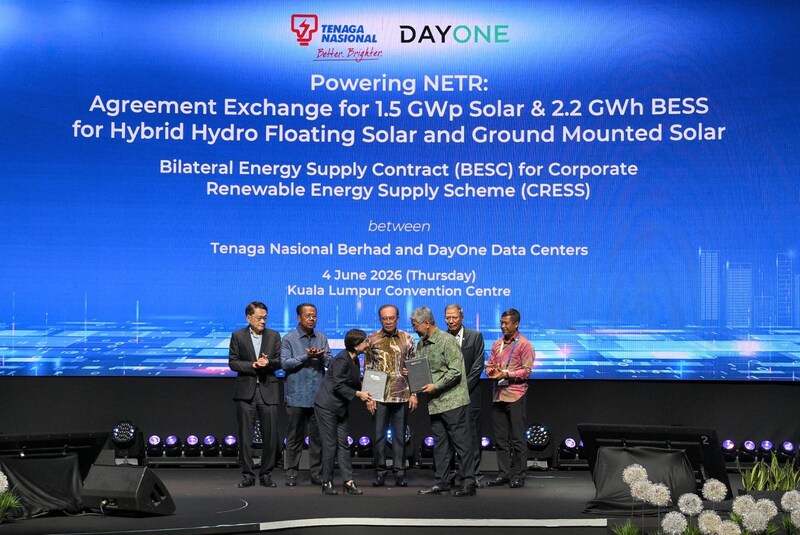
Recent announcements involving DayOne and its strategic partnership with Tenaga Nasional Berhad (TNB) highlight how closely digital infrastructure growth is becoming linked to clean energy deployment. Under the agreement, DayOne secured access to more than 1GW of renewable energy capacity alongside approximately 2.2GWh of battery energy storage systems to support future operations.
The scale of the announcement is significant.
Historically, large-scale renewable energy development in Malaysia was primarily driven by utility procurement programmes and government renewable energy targets. Today, a new source of demand is emerging from the private sector, particularly from operators of hyperscale data centres and artificial intelligence infrastructure.
Data centres are among the most electricity-intensive facilities in the modern economy. They require continuous power supply, extremely high reliability standards and increasingly ambitious sustainability targets. As artificial intelligence applications continue to expand, demand for computing power is expected to rise sharply over the coming decade.
This growth creates new challenges for electricity systems.
Traditional power infrastructure was not designed to support the pace and concentration of demand now being created by large-scale digital infrastructure. Grid operators must ensure reliability while supporting renewable energy integration and maintaining affordability.
Battery energy storage systems can help bridge this gap.
Storage provides flexibility that allows renewable energy generation to be used more effectively. Batteries can store excess energy during periods of high generation and discharge when demand rises. They can also improve power quality, support backup requirements and reduce pressure on transmission networks.
For Malaysia’s storage industry, the emergence of data centres represents an important new market opportunity.
Unlike utility-driven procurement, commercial demand from data centres introduces a second growth engine for storage deployment. This diversification may help accelerate investment while creating additional business models for project developers and technology providers.
The DayOne announcement demonstrates that battery storage is increasingly being viewed as a critical component of digital infrastructure planning. As more data centre projects enter development, demand for reliable, flexible and sustainable power solutions is expected to grow.
Malaysia’s position as a regional digital hub means this trend is likely to continue.
For the energy storage sector, the rise of data centres could become one of the most important market developments of the decade.