
 翻译
翻译
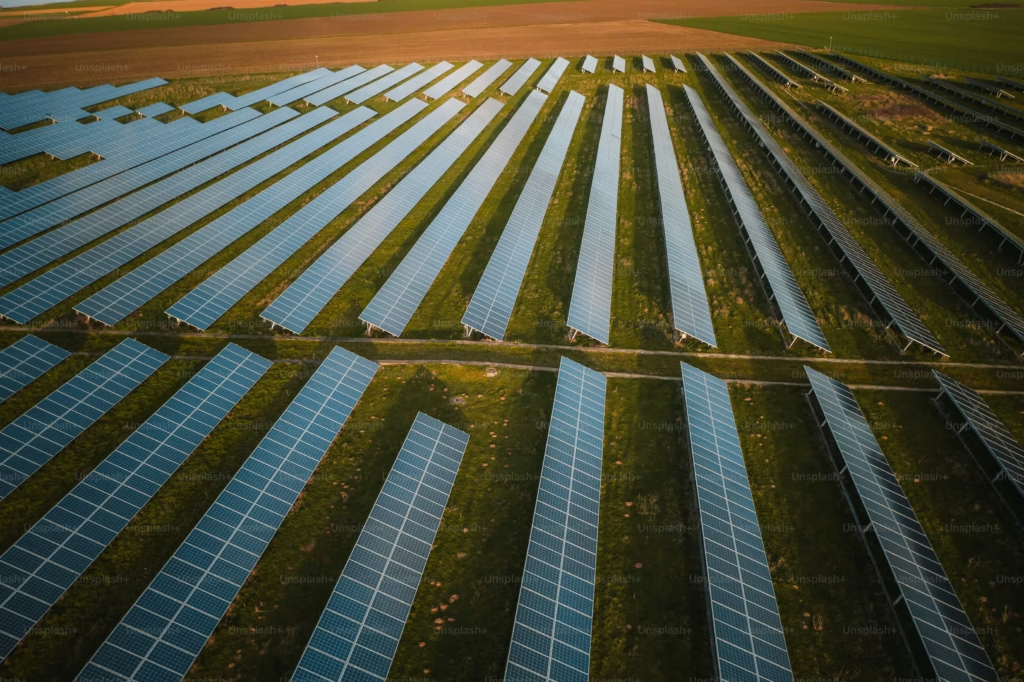
In a move that fundamentally reshapes the economics of large-scale solar development in Malaysia, the government has confirmed that battery energy storage systems (BESS) will be a mandatory requirement for all projects bidding under the upcoming sixth Large Scale Solar (LSS6) programme. The announcement was made by Malaysia’s Deputy Minister of Energy Transition and Water Transformation, signalling a clear shift in national energy policy from solar-only to solar-plus-storage as the preferred utility-scale model.
The LSS6 round is expected to open for bidding in 2026, with a total allocation of approximately 2GW — making it one of the largest renewable energy tenders Malaysia has ever launched. By embedding storage as a condition of participation rather than an optional add-on, the government is directly responding to grid stability concerns that have grown alongside the rapid expansion of intermittent solar generation.
For the energy storage industry, this is a landmark development. It transforms BESS from a niche complement into a core component of every major solar project pipeline in Malaysia. Developers, financiers, and technology suppliers who move quickly to build LSS6-ready capabilities will be best positioned to capture value in what is set to become the country’s most consequential renewable energy procurement cycle to date.
Further reading on this mechanism
Energy & Pulse’s ASEAN utility-scale battery storage tenders 2026 sets out every ASEAN utility-scale storage procurement side by side — published capacity, stated requirements, and the stage each one had actually reached.
Written by Flora Zhang, who covers Malaysia and ASEAN energy storage — policy, tenders and revenue mechanisms — for MESA.