翻译


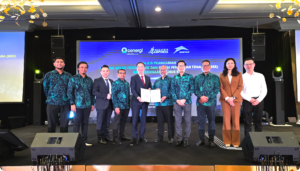
What happened. On 13 October 2026, Leader Energy began construction of a 100 MW / 400 MWh battery energy storage system at Pajam, Negeri Sembilan. It is the first of the four projects shortlisted under the Energy Commission’s MyBeST programme for which a construction start has been publicly announced.
MyBeST is Peninsular Malaysia’s first competitive procurement for grid-connected battery storage, administered by the Energy Commission (Suruhanjaya Tenaga). The Commission received 28 applications and announced the shortlist on 19 December 2025: four projects, each nominally 100 MW / 400 MWh, for a stated programme total of 400 MW / 1,600 MWh, with commissioning targeted for 2027.
What the public record shows, and what it does not
The four projects are at publicly reported milestones that are not the same kind of milestone. This distinction matters for anyone modelling the 2027 commissioning target, and it is easy to lose when the four are listed side by side.
| Developer | Latest publicly reported milestone | Date reported | Site | Battery / integrator |
|---|---|---|---|---|
| Leader Energy | Construction started | 13 Oct 2026 | Pajam, Negeri Sembilan | Not reported |
| ERS Energy (standalone) | Entered “execution phase” after signing project agreements with the offtaker | 10 Jun 2026 | Peninsular Malaysia; site not reported | Not reported |
| ERS Energy + Gamuda Berhad | Entered “execution phase” after signing project agreements with the offtaker | 10 Jun 2026 | Pekan, Pahang | HyperStrong (system integrator), reported 28 May 2026 |
| Blueleaf Energy + Universal Peak | Reached financial close | 2026 | Not reported | Not reported |
Three distinct states are being reported as if they were comparable: construction started, project agreements signed, and financial close reached. Each is a real milestone. None of the latter two means that work has begun on site.
One figure in the table also does not reconcile with the programme total. The Energy Commission’s stated programme size is 400 MW / 1,600 MWh across four projects, which implies 400 MWh each. The Pekan project held by the ERS Energy and Gamuda consortium has been reported at 100 MW / 440 MWh. No official explanation of the 40 MWh difference has been published. It may reflect a difference in measurement basis — nameplate versus usable capacity, or capacity before degradation allowance — or it may mean one project exceeds its nominal size. We state the discrepancy rather than resolve it.
One further detail from the Commission’s own framing is worth keeping on the record: each of the four selected bidders proposed a different battery technology supplier, which the Commission said would allow it to assess different BESS configurations.
What this means for the Malaysian market
Two things follow for members planning around MyBeST.
First, on the 2027 target. One project is on site as of October 2026. For the other three, the most recent public milestones date to the first half of 2026 and describe contractual and financial progress rather than construction. A commissioning forecast built on “four projects awarded, 2027 target” carries more schedule risk than one built on milestone type. Members modelling EPC demand, grid connection queues or equipment lead times should weight the four differently, and should treat the absence of a reported construction start as absence of a report rather than as evidence either way.
Second, on what the data will and will not tell us. Because the Commission deliberately selected four different battery technology suppliers, the four projects are not four copies of one asset. When the first operating data arrives — realistically from 2028 — it will not be directly comparable across projects. Round-trip efficiency, degradation and availability figures will reflect four different technology and integration choices as much as they reflect Malaysian operating conditions. Anyone intending to use MyBeST performance data as a benchmark should establish which project a figure came from before using it.
One fiscal date sits alongside the 2027 commissioning target: Budget 2027, tabled on 9 October 2026, set the Green Investment Tax Allowance window to run from 1 January 2027 until 31 December 2030, a four-year extension of the window that expires at the end of 2026.
Figures verified 19 October 2026 against the sources named above. The public record on this programme is incomplete and changes without notice — check the primary source before relying on any figure here.